


The Photographer’s Hit List
Chase the shot, not the schedule
Sunrise over the Coral Sea, rainforest waterfalls, platypus at Broken River, the peaks of the Isaac region and a night sky well away from the city lights. Whether it’s shots for the gram or you pack the mirrorless on drives, there’s plenty to photograph around Mackay Isaac.
Charge the batteries, clear some room on the phone and add these seven spots to the list.
1. Lamberts Beach Lookout
Get there before sunrise
Start close to Mackay at Lamberts Beach, where the lookout at Slade Point has views across the Coral Sea and Cumberland Islands.
It’s a particularly good spot early in the morning. Arrive before sunrise and you’ll have time to see the sky change over the water before the sun comes up. From the lookout you can photograph the wider coastline, or head down towards the beach and use the rocks, sand and headland in the foreground.
It’s worth keeping an eye on the ocean too. During the winter months, Lamberts Lookout is a popular local spot for watching humpback whales as they make their way along the Queensland coast.
The shot: Sunrise over the Coral Sea from the lookout, with the coastline still in silhouette.
2. Cape Hillsborough National Park
Give yourself an early start
Around 50km north of Mackay, Cape Hillsborough National Park gives you rainforest, rocky headlands, beaches and wildlife within a relatively small area.
Casuarina Beach is best known for the kangaroos and wallabies that come onto the beach around dawn to feed on mangrove seed pods washed in with the tide. They're wild animals, so there’s no guarantee exactly where they’ll be or what they’ll do. Keep your distance, don’t feed them and give them plenty of room to move naturally.
The beach itself is worth photographing before and after the animals appear. At low tide, the exposed sand and rocks give you plenty to work with, while the headlands at either end of the beach help frame the coastline.
Staying at Cape Hillsborough Nature Tourist Park makes the early start a whole lot easier. The park sits beside the national park and Casuarina Beach, so you can be up and outside before sunrise without making the drive from Mackay in the dark.
After sunrise, the surrounds offer plenty more to capture, from natural rock pools uncovered in the changing tides to spectacular lookouts, turtle spotting and more than 150 species of birds to try and spot.The shot: Kangaroos or wallabies on Casuarina Beach as the morning light comes across the water or the view from Twin Beach Lookout.

3. Finch Hatton Gorge
Take your time in the rainforest
Head west from Mackay into the Pioneer Valley and the landscape quickly changes from cane fields and small towns to rainforest.
At Finch Hatton Gorge, walking tracks lead through the forest towards waterfalls and swimming holes including Araluen Cascades and the Wheel of Fire – perfect for practicing those long exposures. There’s plenty to photograph along the way, so it’s worth allowing more time than you think you’ll need.
Overcast conditions can work particularly well here. Softer light through the canopy makes it easier to photograph the water and surrounding rainforest without the harsh patches of sunlight you can get in the middle of a clear day. After rain, the rocks, leaves and vegetation can look especially good.
Bring something to protect your camera from water and humidity, particularly if you're planning on getting close to the swimming holes.
If you'd prefer to make a day of the Valley without driving yourself, Mackay Adventure Tours & Transfers runs guided experiences through the Pioneer Valley, including Finch Hatton Gorge and Eungella.
The shot: Araluen Cascades surrounded by rainforest, with a slower shutter speed picking up the movement in the water.
4. Eungella National Park
See what the weather gives you
Keep following the road up the Clarke Range and you'll reach Eungella National Park.
The drive up is worth taking slowly, particularly once you start gaining elevation. At the top of the range, Sky Window is one of the easiest places to stop with a camera. A short rainforest circuit leads to viewing platforms looking back across the Pioneer Valley.
Clear weather gives you long views across the farmland and ranges below, but don't be disappointed if you arrive to find cloud sitting over Eungella. Mist through the rainforest and low cloud moving across the ridges can be just as interesting to photograph, particularly early in the morning.
There are more than 20km of walking tracks throughout the national park if you want to spend longer exploring beyond the lookouts. For something unique, the Tree Arch should be at the top of your shot list.
The shot: The Pioneer Valley from Sky Window in the early morning, particularly when there's low cloud sitting below the mountain range.

5. Broken River
Have the camera ready
A short drive from Eungella village brings you to Broken River, one of the best-known places in Australia to see platypus in the wild.
Early morning and late afternoon are generally the best times to look for them. Find a position around the viewing areas, stay quiet and watch the water. Small bubbles or ripples can be the first indication that a platypus is moving below the surface.
This is where your spare batteries and a longer lens come in handy. Platypus can surface briefly before disappearing again, and keeping your distance and staying patient means you can watch and photograph them without disturbing them.
Don't pack the camera away if nothing appears immediately. The river, reflections and surrounding rainforest are worth photographing in their own right, and there's plenty of birdlife around the area as well.
If wildlife photography is a priority, staying overnight around Eungella is a must to improve your chances at spotting, giving you two opportunities at the better viewing times instead of fitting everything into one day.
The shot: A platypus on the surface of Broken River.
6. Peak Range National Park
Make the landscape the subject
For something completely different, head inland towards the Peak Range National Park, between Moranbah, Clermont and Dysart.
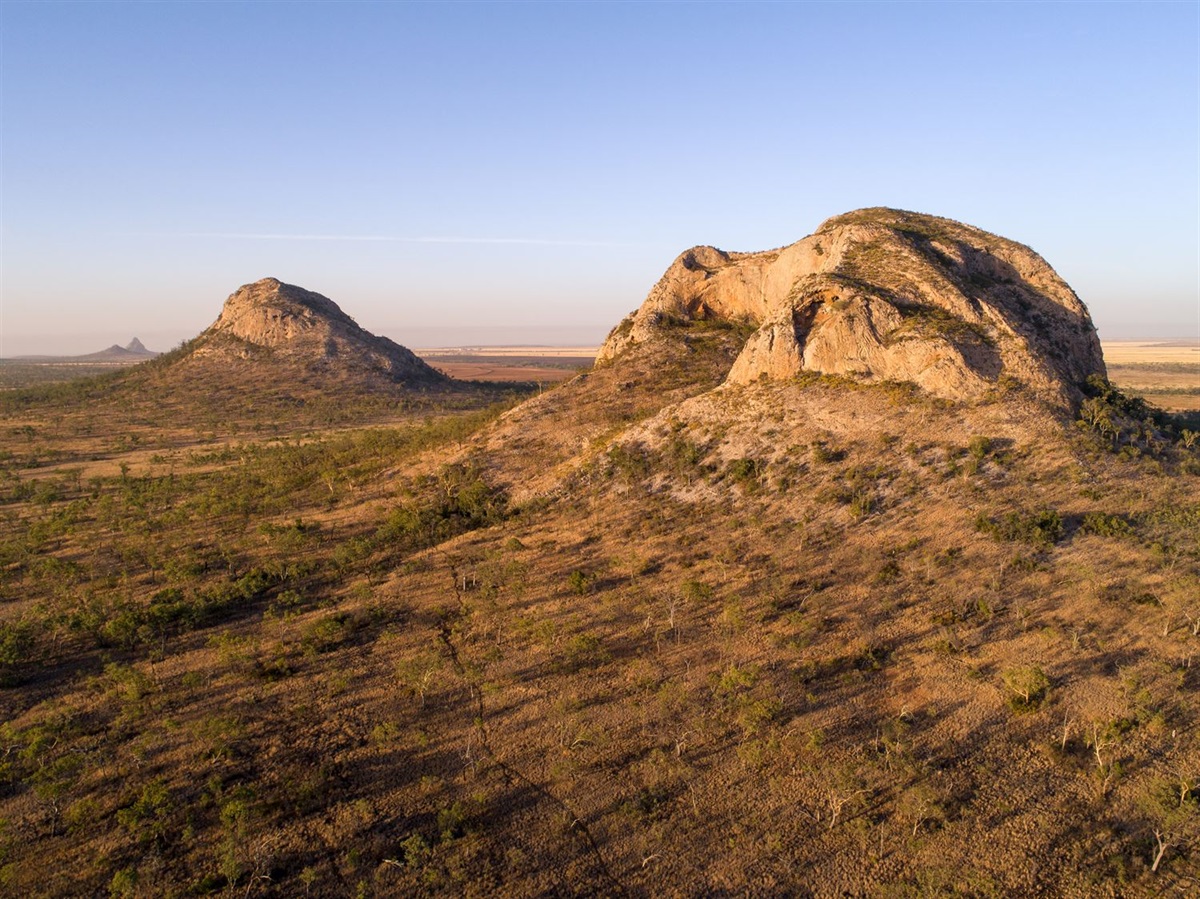
The range is made up of a series of volcanic peaks rising sharply from the surrounding plains, including Wolfang Peak, Eastern Peak, Lord's Table Mountain and the Gemini Mountains. They're visible from a long way off, which gives you plenty of opportunities to photograph the scale of the landscape without needing to be right underneath them.
Sunrise and sunset are ideal times for viewing the range. Late afternoon is a good option for photography, when lower light starts picking up the shape of the peaks against the flatter country around them.
There are no facilities in the national park, so come prepared and don’t rely on having phone reception or services nearby. The Gemini Peaks section offers a graded walking track that gives you enough elevation to capture the sprawling landscape below and the peaks above, without any scrambling. You also don’t need to head off-track to get the photo, with distant views of the range from highway stops where you can photograph the peaks safely without entering the more remote sections of the park.
For a completely different perspective, take to the skies with Bush Heli-Services for an aerial flight around the peaks. It’s a pretty special way to see the scale of the Peak Range from above, particularly if you’re looking to capture something you simply can’t get from ground level.
The shot: The Peak Range in late-afternoon light, with the open Isaac landscape showing just how abruptly the mountains rise from the plains.
7. Cape Palmerston National Park
Keep the camera out after dark
Finish on the Isaac Coast at Cape Palmerston National Park, around 115km south-east of Mackay.
This one takes a little more preparation. Access through the national park is by 4WD and camping permits need to be booked before you arrive. Once you're in, there are beaches, rocky headlands, coastal woodland and views towards Mount Funnel to photograph.
The coastal camping areas also make it possible to stay for both sunrise and sunset rather than trying to get in and out on the same day. During the right seasons, keep an eye on the water for marine life including whales, dolphins and turtles.
If you want to explore the Isaac Coast without giving up all the comforts, Cape Palmerston Holiday Park and BarraCrab Caravan Park are also worth considering as a base for your coastal adventure. You can settle in for the night and still make the most of those early mornings, late afternoons and clear coastal skies.
Then there’s the night sky. Once you're away from Mackay and the larger towns, there’s considerably less artificial light around you. On a clear night, set up the tripod at camp and try a longer exposure with the coastline or surrounding landscape in the foreground.
Check the latest Queensland Parks alerts and conditions before leaving, particularly after wet weather.
The shot: A clear night above the Isaac Coast, with the beach, headland or campsite included in the frame.

Remember, the best shots are often the unexpected. The great thing is here, that’s around every corner.
Get Social
@visitmackayisaac
#visitmackay #ourisaac